4-week courseLondonMax 12 people
Become a Technical Founder
Be the founder who can build it yourself. A hands-on Claude Code course for non-technical founders and intrapreneurs. Ship new features, better customer experiences, and the tools and automations that save your business time and money, without waiting on a developer.
Book the next date
- £1,995per person, including VAT$2,495per person€2,295per person, including VAT
- Mondays, 09:30-12:30
- Covent Garden, London
Booking for a team, or want to talk it through first?

Taught by
Mark Nguyen
Co-founder, Atlas Learn


Shaped around you
Every week is a working session built around your own idea. Go from non-technical to independent builder alongside a small group of founders and intrapreneurs, and finish by presenting it live at Founder Demo Day.
Before every session, we run a needs assessment with every participant, so we can shape it around what you need.
In-person sessions
- 1Think, Design & Prototype
- 2Build With Claude Code
- 3Refine, Test & Make It Production-Ready
- 4Deploy, Launch & Become an Independent Builder
Leave able to build anything you can think of
You'll master Claude Code in four weeks, then use it to turn any idea into a working product. No coding background needed. You'll leave with the confidence to build it, launch it and get your first customers.
Non-technical founders
Build and launch your first version yourself, and find out whether people want it before you hire a developer or raise money.
Intrapreneurs
Turn the tool or product your company keeps talking about into something people can use, and show it working instead of pitching a slide.
From idea to launch in four weeks
Four in-person sessions, each building on the last, all on your own product.
Week 1
Think, Design & Prototype
- Turn your idea into an MVP product spec
- Map user journeys and design your screens with Google Stitch
- Build your first working prototype
Outcome: A designed, working prototype of your product.
Week 2
Build With Claude Code
- Turn product requirements into working features
- Add a database and user accounts with Supabase
- Debug problems and save your work with GitHub
Outcome: A working MVP with your core user journey.
Week 3
Refine, Test & Make It Production-Ready
- Improve the design and user experience
- Test your product with real users
- Tighten up security, performance and reliability
Outcome: A polished, tested, launch-ready product.
Week 4
Deploy, Launch & Become an Independent Builder
Founder Demo Day & drinks
- Deploy to a live URL with Vercel
- Launch and onboard your first users
- Present your product at Founder Demo Day
Outcome: A live product with real users, and the skills to keep building on your own.
*Curriculum subject to change, to improve the outcome for our students.
See how you'll build
The tools and the way of working you'll use from the first session.
Set up the way we build
We start with a full tour of Claude Code. By the end of it you'll know what each part does and, more importantly, when to reach for it.
Then we set up the project structure we use on real products, so your idea, your spec and your code all live in one place from day one.
The Claude Code tour the course opens with. Design and architect your app
Yes, you can turn a sentence into a good-looking app. But who owns your data? Is your code secure? And what happens to your bill when real users show up?
We lay the foundations properly, the way we would on a real product. You write down the spec and the architecture decisions before anything gets built, which is what stops the build wandering once it's moving.

The slide we scope your product against. Know what to ask for, and when the answer's wrong
You'll write very little code by hand. You do need to know what to ask for, and how to tell when Claude has got it wrong.
That second part is the one nobody teaches. We practise reading a plan before it runs, catching the confident answer that solves the wrong problem, and getting it back on track without starting over.
One brief, and the app it produced. Connect the services a real product needs
Products get interesting when they talk to other services. You'll add a database and accounts with Supabase, take payments with Stripe, and connect the APIs your product needs, then watch a test payment land.

A finished app, with its services attached.
What a session looks like
12 people at most, all building their own products, with an instructor moving between tables to get you unstuck.


Leave with a product, not a notebook
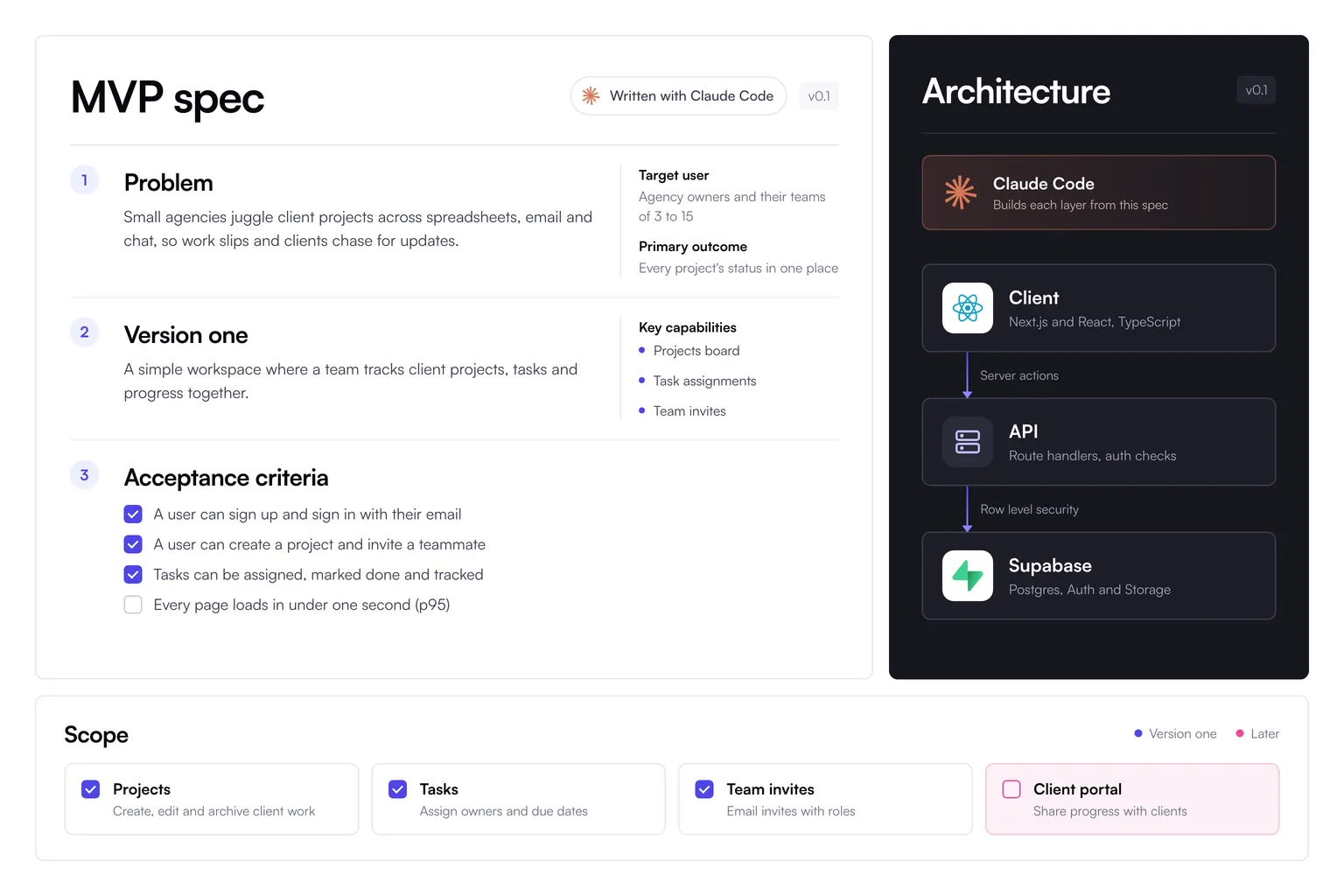
Your MVP spec
Who it's for, the one job it has to do, the screens it needs, and what you're leaving out of version one.
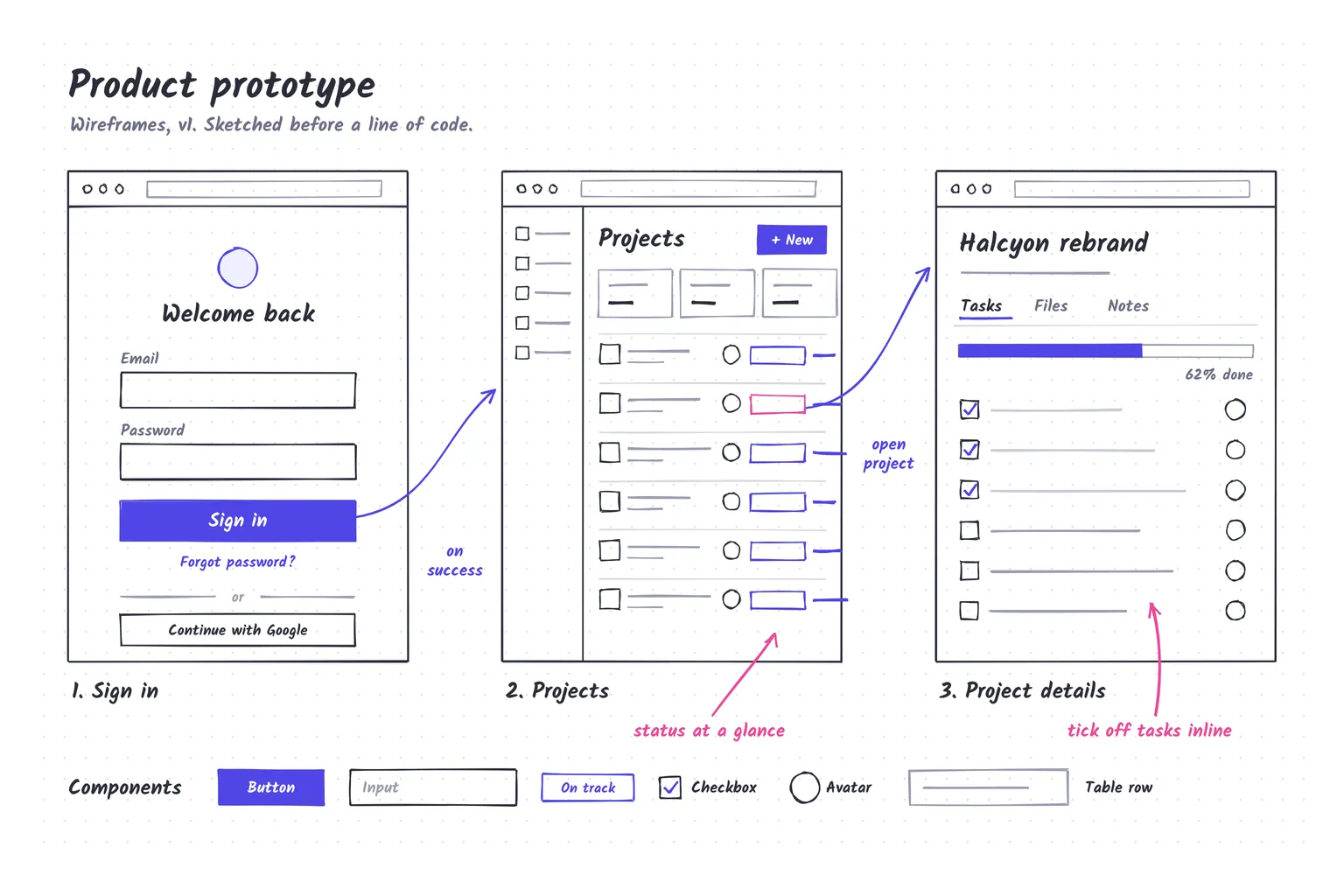
Designed screens and a prototype
User journeys, wireframes and screens from Google Stitch, turned into a prototype you can click through.
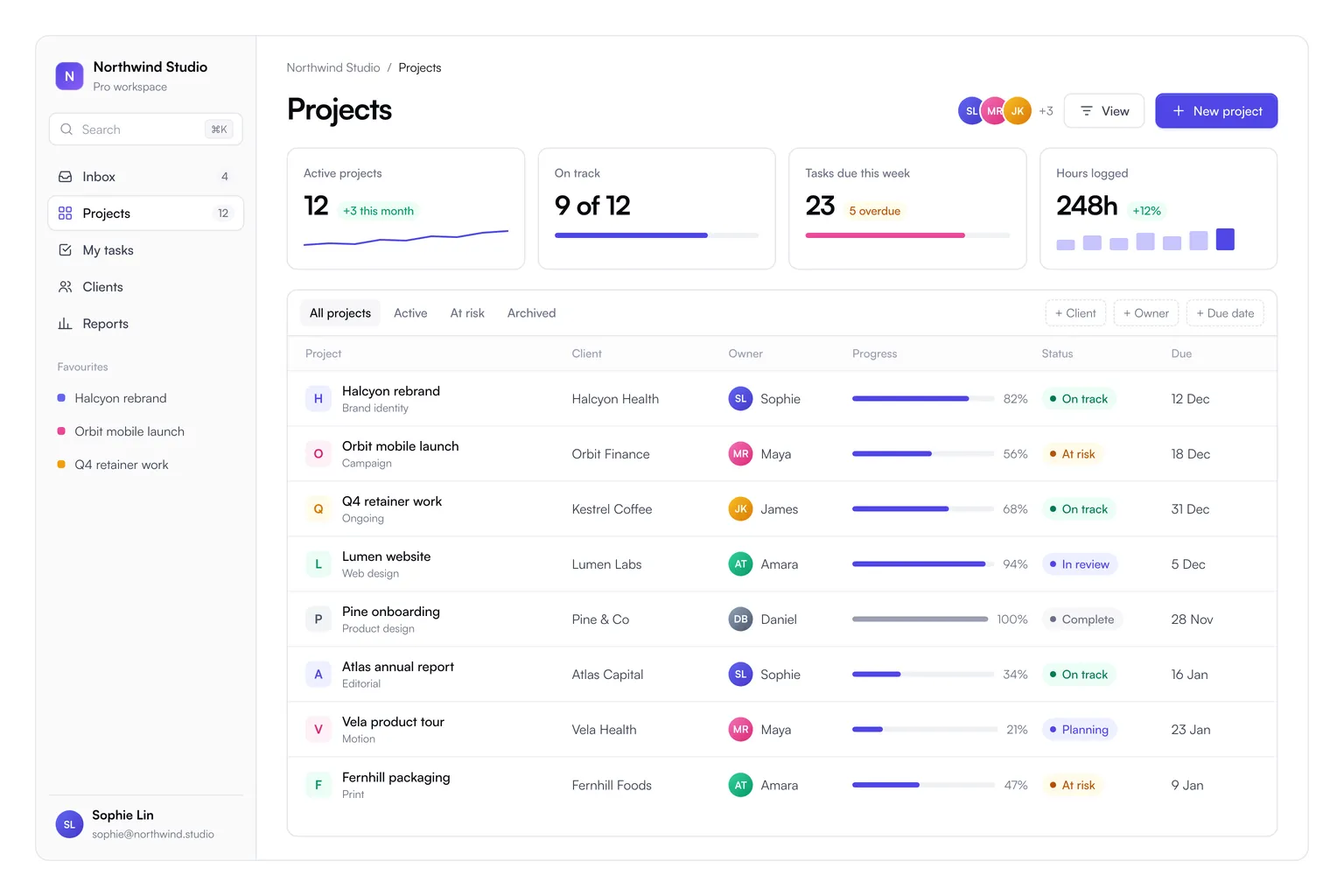
A working web app
Real pages, user accounts and a database, built with Next.js and Supabase and saved in your own GitHub.
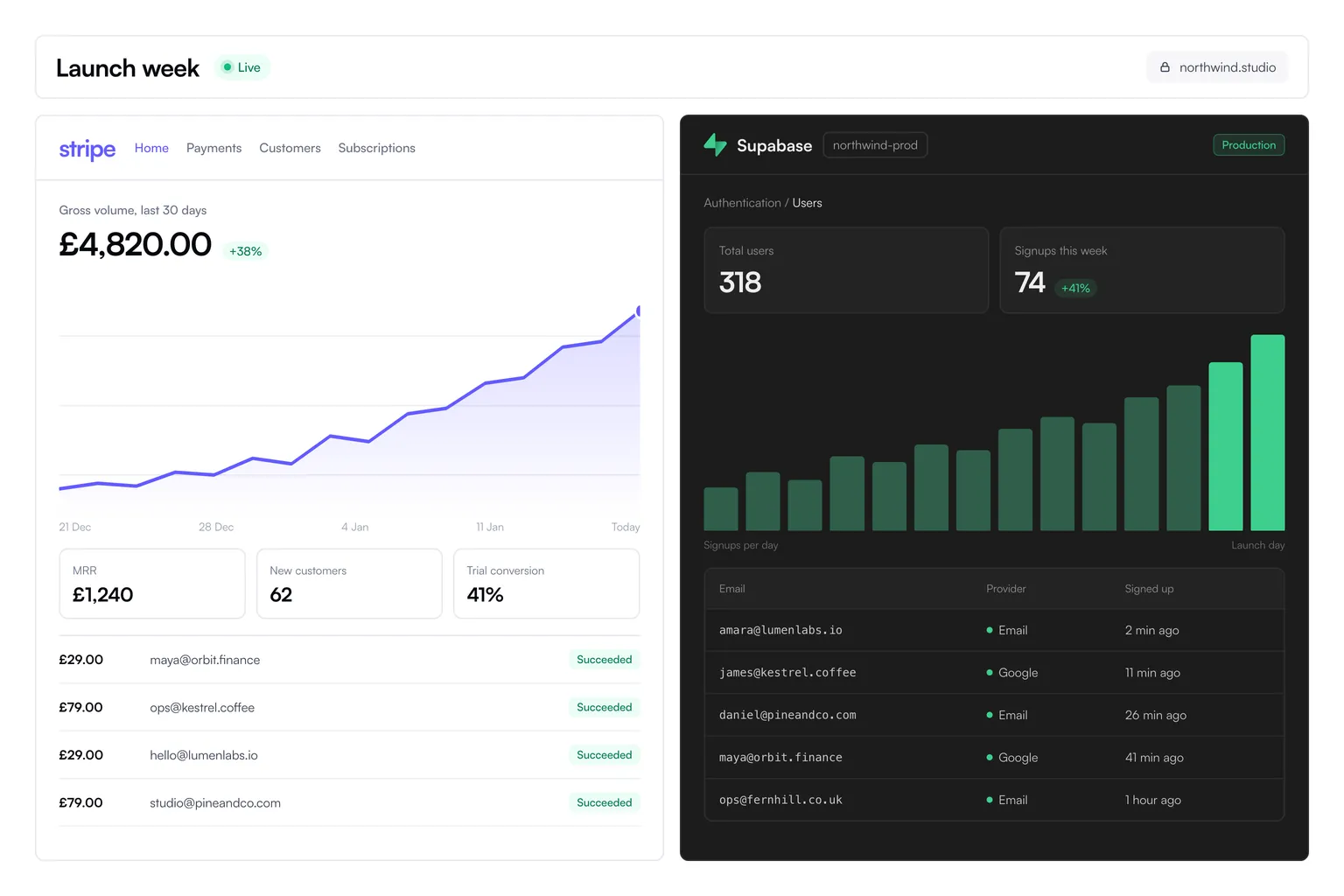
A live product with real users
Live at its own URL, ready to share with your first users.
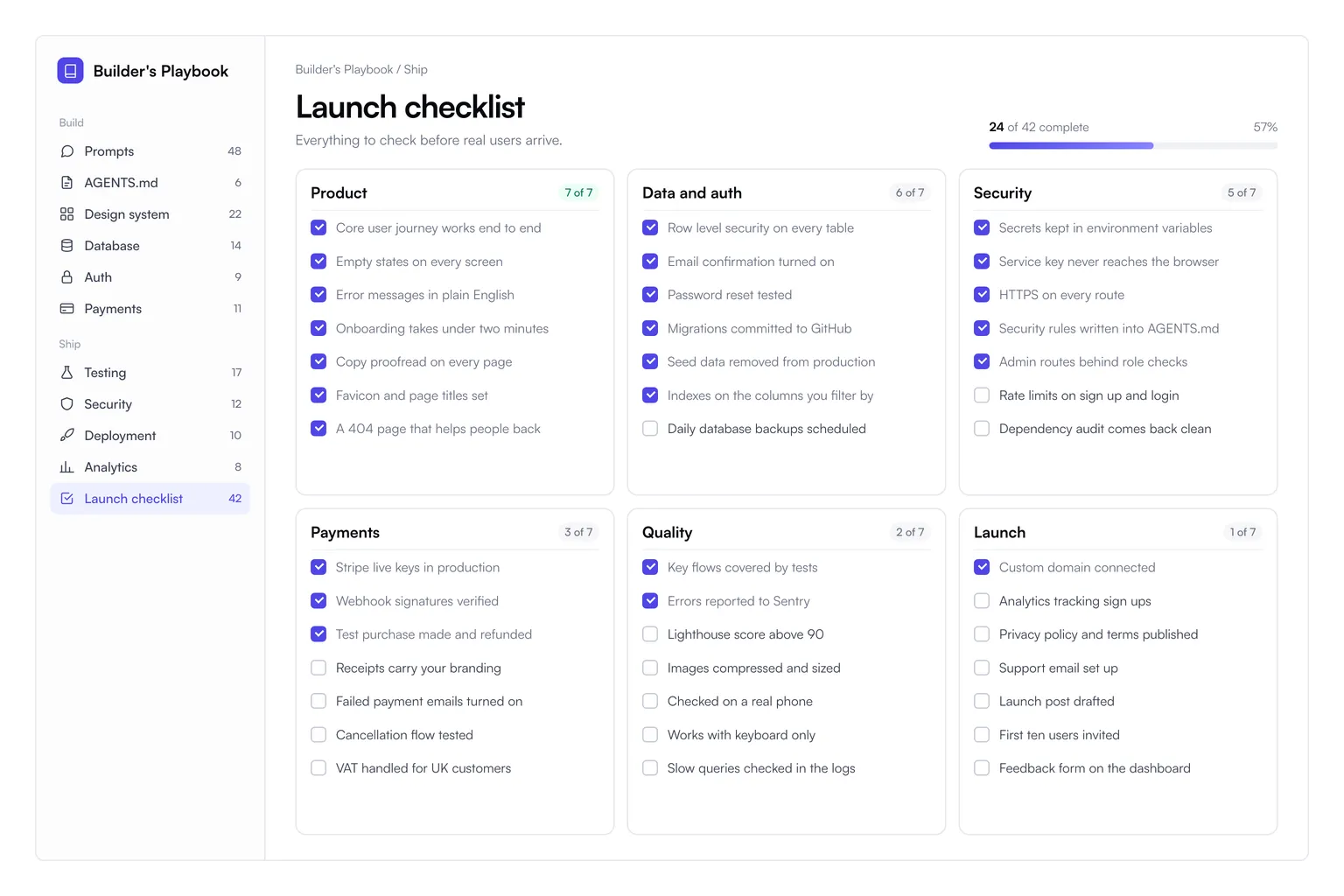
The Builder's Playbook
The prompts, AGENTS.md templates and checklists we use, so your next feature doesn't start from a blank page.
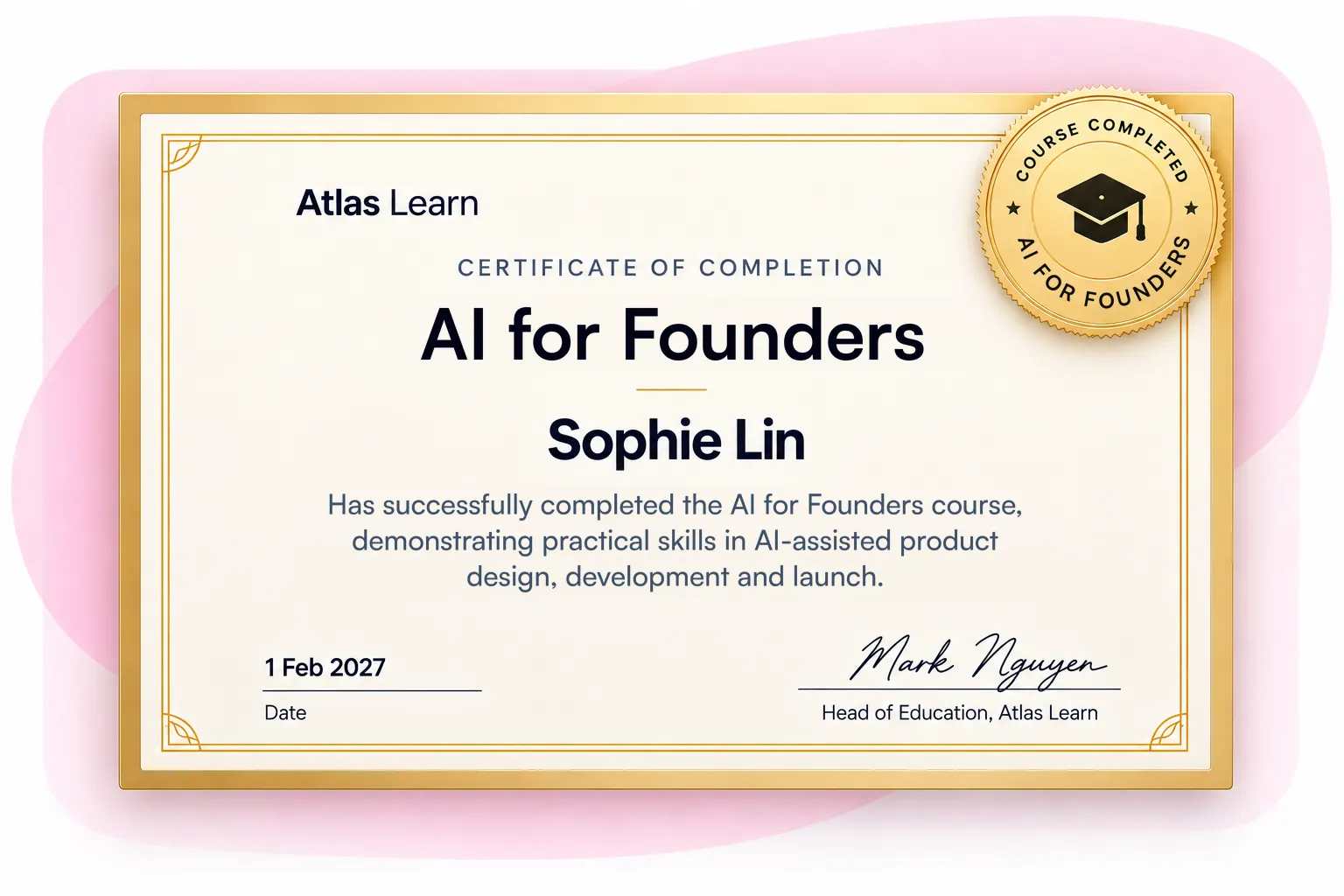
A certificate of completion
Presented at Founder Demo Day, and ready to add to your LinkedIn profile.
Tools you'll use
 Claude
 Google Stitch
 Supabase
 GitHub
 Vercel
Meet your instructor

Mark Nguyen
Co-founder, Atlas Learn
Nearly two decades building and scaling products at Microsoft and Amazon, then built a design agency for deep tech startups. Now co-founder of Atlas Learn, helping founders, marketers and teams build real things with Claude.
FAQs
Do I need to know how to code?
No. Most people on this course have never written code. You'll direct Claude Code in plain English, and we teach you enough about how the pieces fit together to spot when something's wrong. By the end you'll be able to read code. You won't need to write much of it.
How much time does it take outside the sessions?
Plan on four to six hours a week. The sessions teach the method and get you unstuck. Most of the building happens between them, whenever suits you.
What should I bring?
A laptop, Mac or Windows, and your charger. And the idea you want to build. If you're not sure it's the right size for four weeks, say so in the onboarding questionnaire and we'll help you cut it down before the first session.
Are there any extra costs?
You'll need a paid Claude plan to use Claude Code. Pro is enough to start. Everything else we use has a free tier that covers you through the course and your first users, including Supabase, Vercel, GitHub and Sentry. If you want your own domain name, that's usually around £10 a year.
Will my product really be live by the end?
That's the point of week 4. You deploy to a real URL and get your first users onto it. We size your product in week 1 so it fits, which is why we spend time cutting scope before anything gets built.
What if my idea needs to be a phone app?
Build the web version first. It's the quickest way to find out whether people want it, and most of what you learn carries over when you do go mobile. If you're unsure, email hello@atlaslearn.io and we'll talk it through before you book.
Can I build something for my employer?
Yes, and plenty of people do. Check your company's rules on AI tools and customer data first, and use made-up data until you have sign-off. If your company is paying, email hello@atlaslearn.io and we'll invoice them directly.
Who owns what I build?
You do. The code lives in your GitHub account and runs on your own Supabase and Vercel accounts, so nothing is tied to us when the course ends.
Will it be tailored to me?
Before every session, we run a needs assessment with every participant, so we can shape it around what you need. The examples and exercises follow your work, and the core of the course stays the same for everyone.
What if I need to cancel?
Can't make it? Move to another date for free, any time. You also have 14 days after booking to cancel for a full refund. Booking terms and how to cancel.
Can you run this for my whole team?
Yes. Every course here can be run privately for your team, online or in person, at your office or ours, and built around the work your team actually does. Start with a free 30-minute call. See team training.
Ready to build it?
Not sure it's the right fit for your idea? Book a call and we'll talk it through.