AI for Founders: 4 week course in London
Go From Idea to Live Product With AI.
A hands-on course for non-technical founders and intrapreneurs. Design, build and launch a real web product with Claude Code, then keep building on your own.

AI for Founders
Go from non-technical to independent builder. You'll work on your own idea alongside a small group of founders and intrapreneurs, and finish by presenting it live at Founder Demo Day.
£1,995per person, including VAT$2,495per person€2,295per person, including VAT
- Mon 23 Nov 2026 - Mon 14 Dec
- Mondays, 09:30-12:30
- Central London
- Max 12 people per cohort
- Enrolment closes Sun 22 Nov
In-person sessions
- 1Think, Design & Prototype
- 2Build With Claude Code
- 3Refine, Test & Make It Production-Ready
- 4Deploy, Launch & Become an Independent Builder
What You'll Receive.
- An onboarding questionnaire, so the sessions fit what you're building
- Help between sessions in a private group chat for your cohort
- Your own product, live on the web and running in your own accounts
- The Builder's Playbook: our prompts, AGENTS.md templates and launch checklist
- Founder Demo Day, your certificate and drinks
The curriculum
From Idea to Launch in Four Weeks.
Four in-person sessions, each building on the last. You work on your own product the whole way through, and leave knowing how to keep building it without us.
Week 0As soon as you enrol
Onboarding Questionnaire
- Tell us what you want to build and who it's for
- Be honest about how comfortable you are with tech
- We use your answers to shape the examples in every session
Week 1
Think, Design & Prototype
- Set up Claude Code, VS Code and GitHub
- Turn your idea into an MVP product spec
- Learn the product design and UX principles that matter
- Map user journeys and sketch wireframes
- Design your screens with Google Stitch
- Build your first working prototype
Outcome: A designed, working prototype of your product.
Week 2
Build With Claude Code
- Prompting, context and a development workflow that holds up
- Turn product requirements into working features
- Build responsive pages and navigation with Next.js
- Add a database and user accounts with Supabase
- Connect APIs and third-party services
- Debug problems and use version control with GitHub
Outcome: A working MVP with your core user journey.
Week 3
Refine, Test & Make It Production-Ready
- Improve the design and user experience
- Create a consistent design system with reusable components
- Test your product with real users
- Find and fix issues with Claude Code
- Tighten up security, performance and reliability
- Get ready to deploy
Outcome: A polished, tested, launch-ready product.
Week 4
Deploy, Launch & Become an Independent Builder
Founder Demo Day & drinks- Deploy to a live URL with Vercel
- Set up analytics and error monitoring
- Learn how to maintain and improve your product
- Prepare your launch assets and messaging
- Launch and onboard your first users
- Present your product at Founder Demo Day
Outcome: A live product with real users, and the skills to keep building on your own.
*Curriculum subject to change, to improve the outcome for our students.
Leave With a Product, Not a Notebook.
Every week ends with something you can open and use. By Demo Day it's live, and you know how to keep it running.
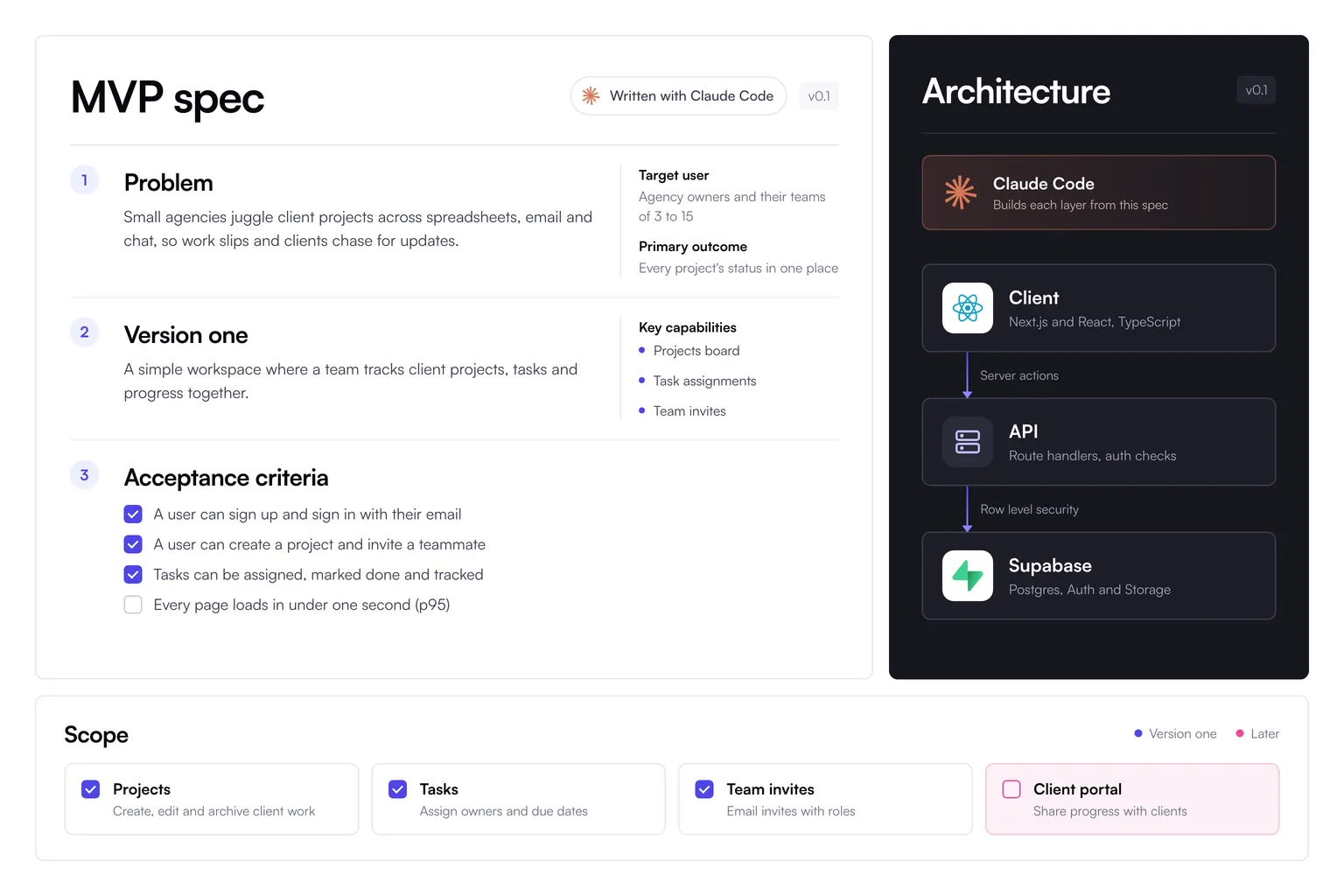
Your MVP spec
Who it's for, the one job it has to do, the screens it needs, and what you're leaving out of version one.
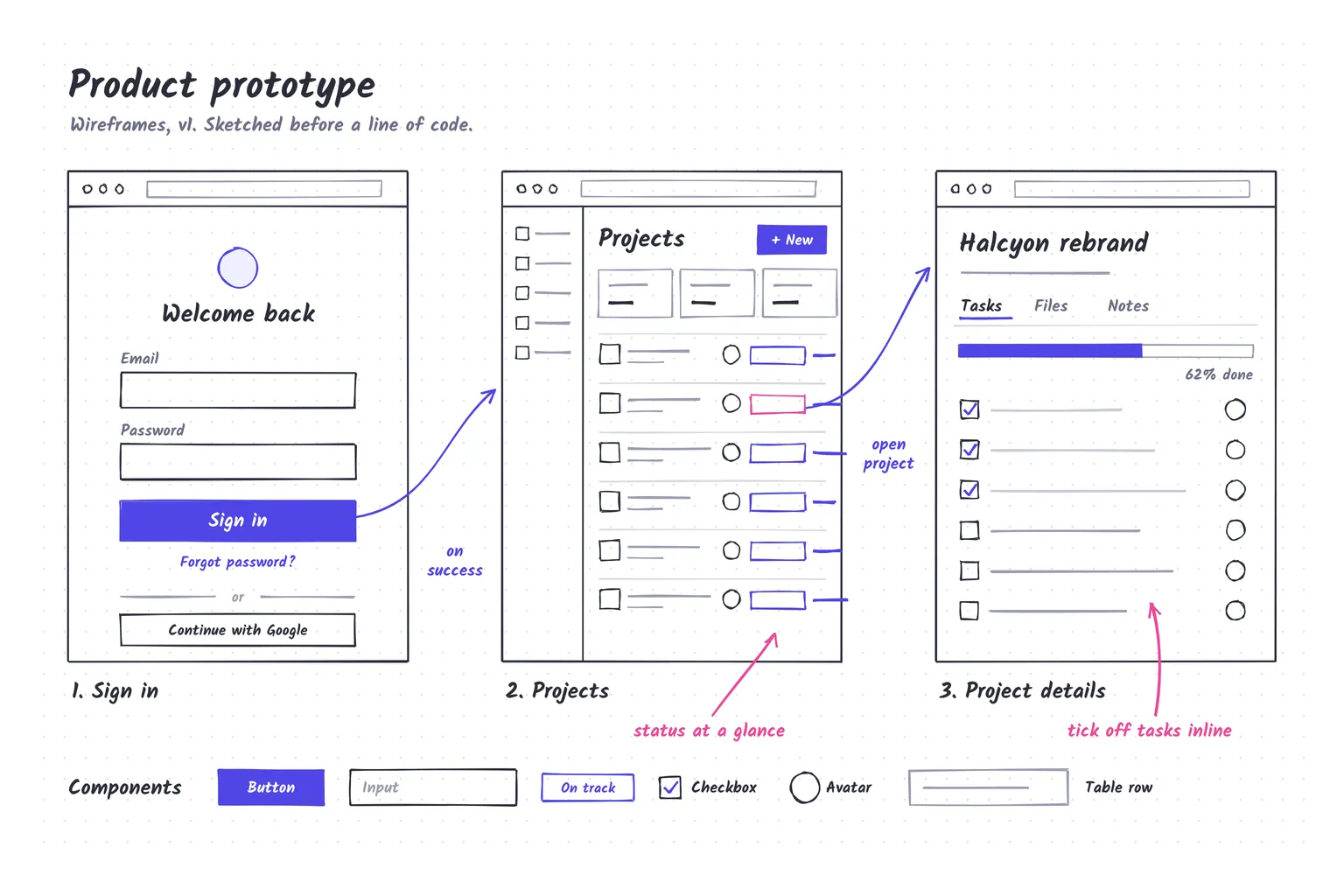
Designed screens and a prototype
User journeys, wireframes and screens from Google Stitch, turned into a prototype you can click through.
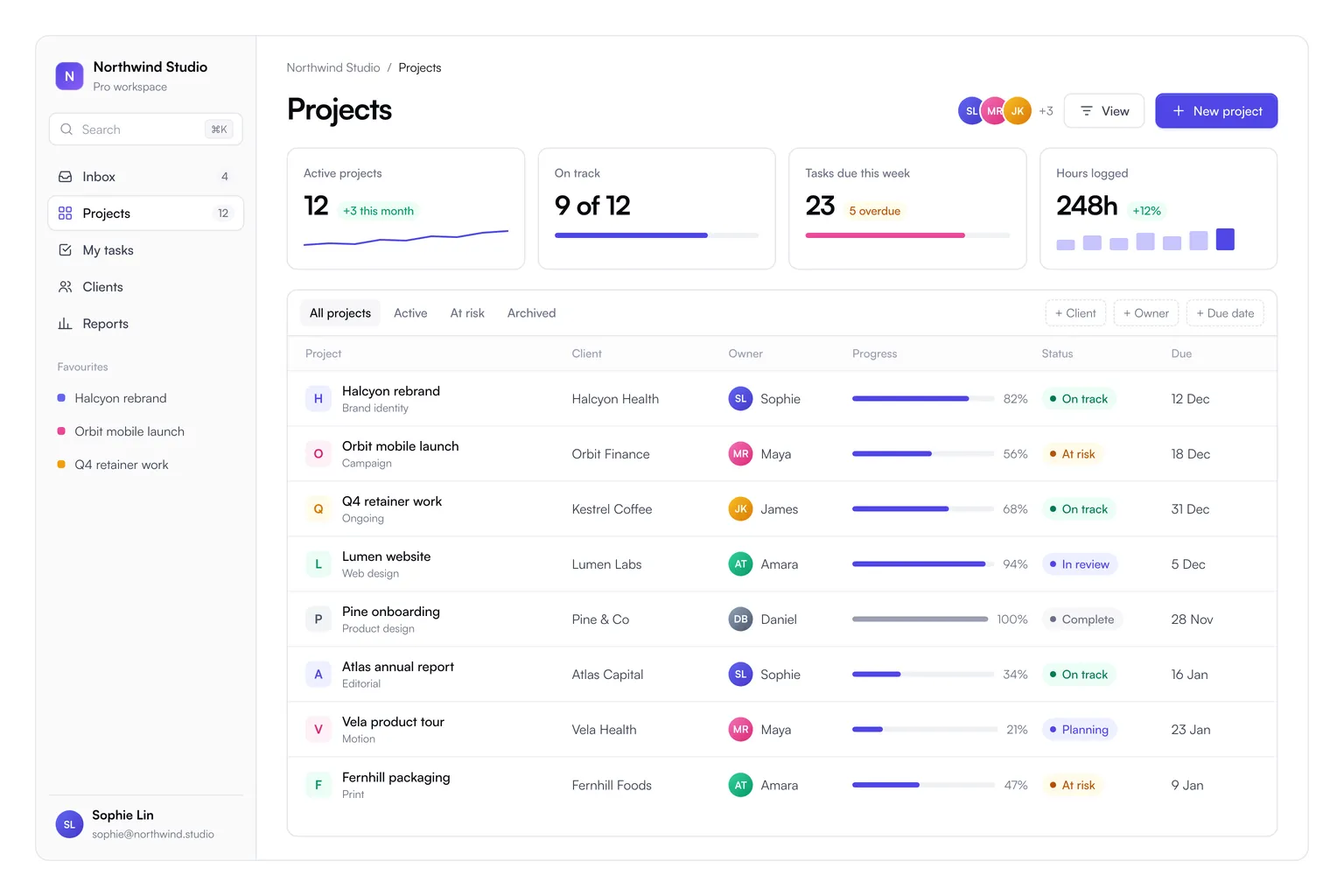
A working web app
Real pages, user accounts and a database, built with Next.js and Supabase and saved in your own GitHub.
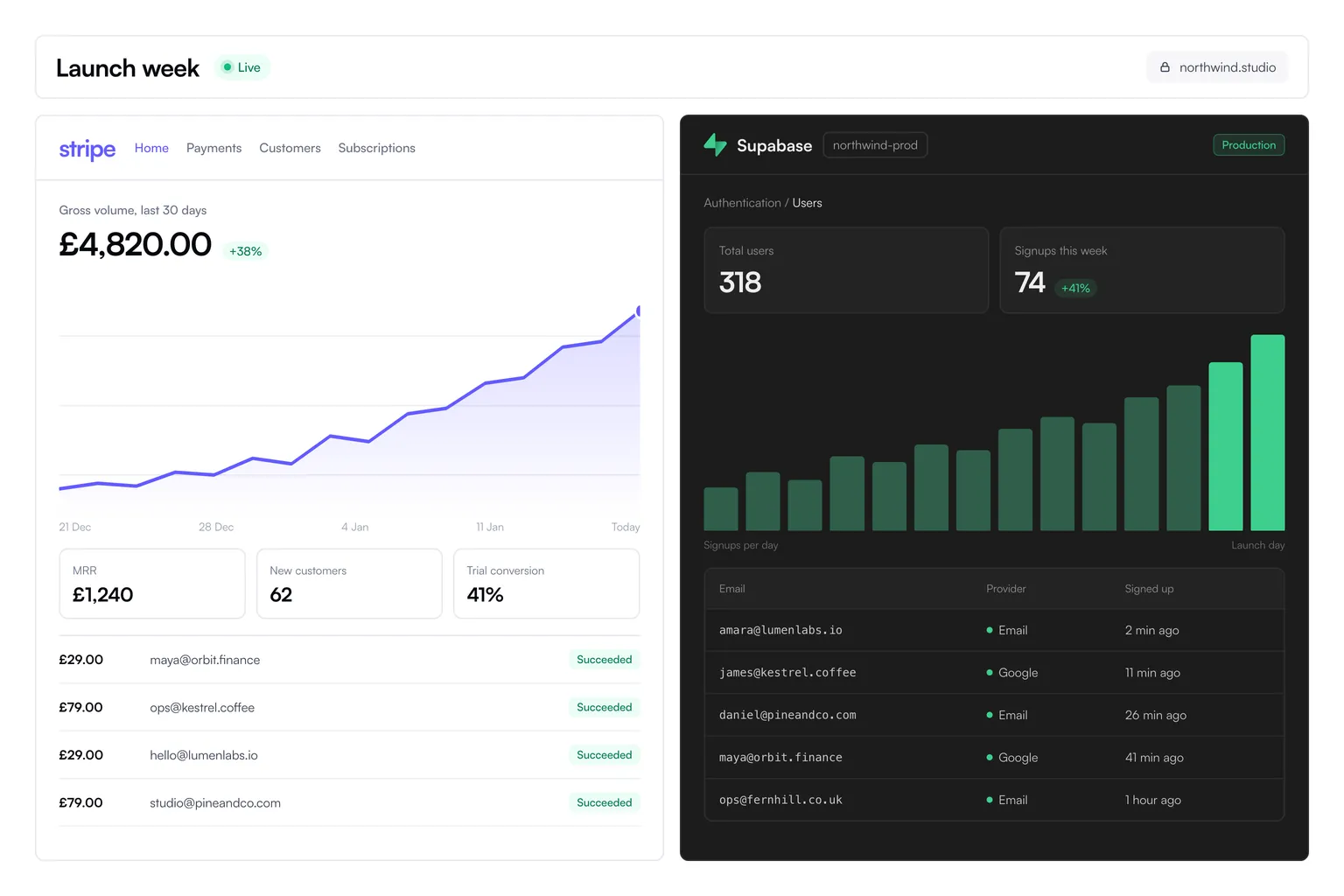
A live product with real users
Live at its own URL, ready to share with your first users.
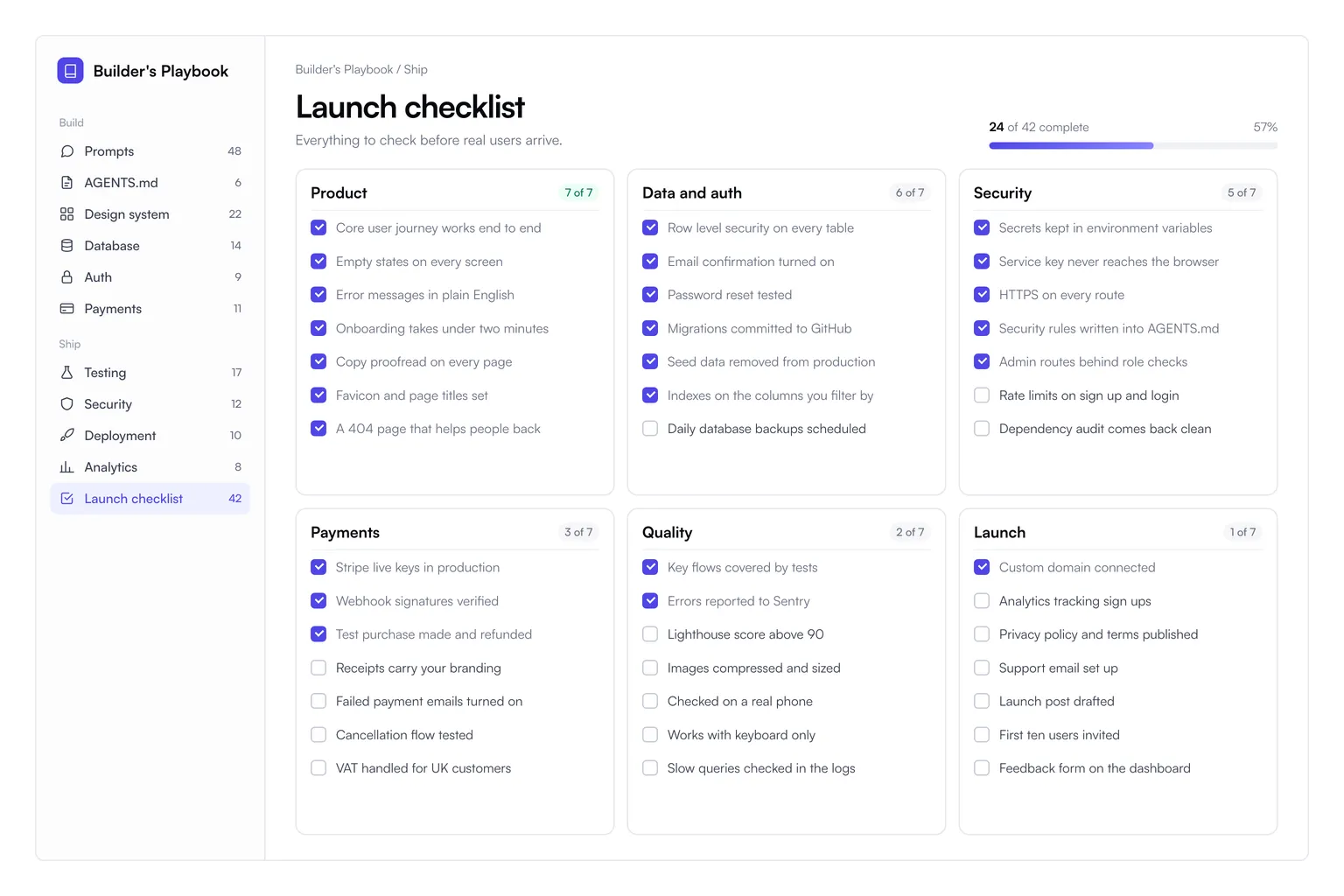
The Builder's Playbook
The prompts, AGENTS.md templates and checklists we use, so your next feature doesn't start from a blank page.
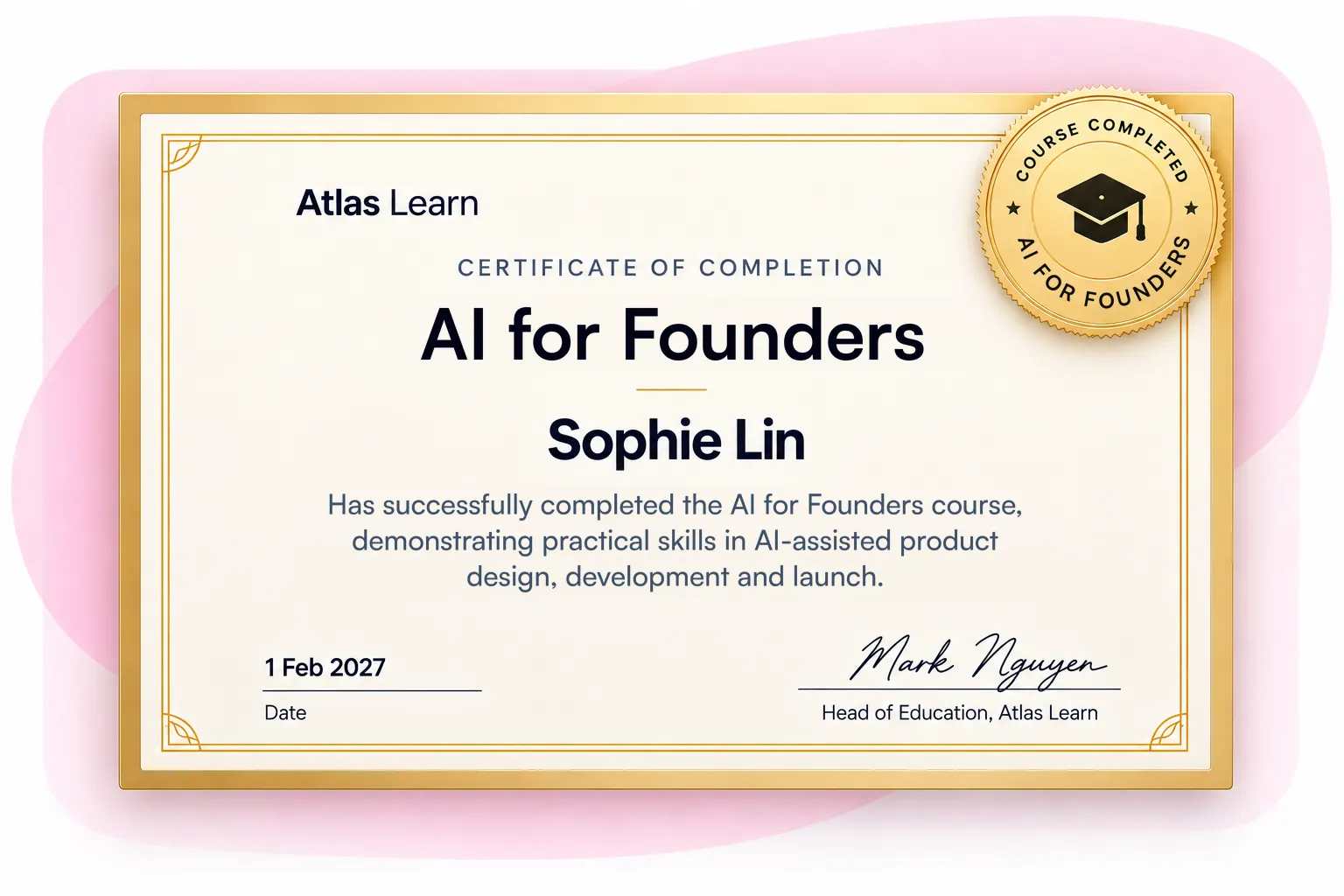
A certificate of completion
Presented at Founder Demo Day, and ready to add to your LinkedIn profile.
Your Tech Stack.
The same tools professional product teams use, so nothing you build needs rewriting when it takes off.
- AI development
 Claude Code
- Connectors
 Model Context Protocol
- Research & second opinions
 ChatGPT
- Design & prototyping
 Google Stitch
- Code editor
 VS Code
- Web framework
 Next.js
- Programming language
 TypeScript
- UI & styling
 Tailwind CSS
- Backend, database & login
 Supabase
- Version control
 GitHub
- Hosting & deployment
 Vercel
- Error monitoring
 Sentry
Who's it for
For People With an Idea and No Developer.
For people who know what they want to build and are tired of waiting for someone else to build it.
No coding background needed. If you can explain clearly what you want, you can build it.
Non-technical founders
Build and launch your first version yourself, and find out whether people want it before you hire a developer or raise money.
Intrapreneurs
Turn the tool or product your company keeps talking about into something people can use, and show it working instead of pitching a slide.
FAQs
Do I need to know how to code?
No. Most people on this course have never written code. You'll direct Claude Code in plain English, and we teach you enough about how the pieces fit together to spot when something's wrong. By the end you'll be able to read code. You won't need to write much of it.
How much time does it take outside the sessions?
Plan on four to six hours a week. The sessions teach the method and get you unstuck. Most of the building happens between them, whenever suits you.
What should I bring?
A laptop, Mac or Windows, and your charger. And the idea you want to build. If you're not sure it's the right size for four weeks, say so in the onboarding questionnaire and we'll help you cut it down before the first session.
Are there any extra costs?
You'll need a paid Claude plan to use Claude Code. Pro is enough to start. Everything else we use has a free tier that covers you through the course and your first users, including Supabase, Vercel, GitHub and Sentry. If you want your own domain name, that's usually around £10 a year.
Will my product really be live by the end?
That's the point of week 4. You deploy to a real URL and get your first users onto it. We size your product in week 1 so it fits, which is why we spend time cutting scope before anything gets built.
What if my idea needs to be a phone app?
Build the web version first. It's the quickest way to find out whether people want it, and most of what you learn carries over when you do go mobile. If you're unsure, email hello@atlaslearn.io and we'll talk it through before you book.
Can I build something for my employer?
Yes, and plenty of people do. Check your company's rules on AI tools and customer data first, and use made-up data until you have sign-off. If your company is paying, email hello@atlaslearn.io and we'll invoice them directly.
Who owns what I build?
You do. The code lives in your GitHub account and runs on your own Supabase and Vercel accounts, so nothing is tied to us when the course ends.
What if I need to cancel?
You have 14 days after booking to cancel. You get a full refund before any teaching, then 25% is deducted per full session attended. Part-sessions are charged proportionately. No onboarding charge applies. Booking terms and how to cancel.
Can you run this for my whole team?
Yes. Every course here can be run privately for a team, in person or online, and tailored to the work your team actually does. Email hello@atlaslearn.io with roughly how many people and what you want them to be able to do afterwards.